The patellar luxation situation

Ever feel grateful for the simplicity of going to the bathroom?

I do.

Not too long ago, going to the bathroom required about 10 minutes of prep beforehand and another 10 minutes de-prep afterwards. The average trip took about 30 minutes, which is a significant chunk of your day. Think about it, you can watch an entire news program in that time. Bank transactions, trips across entire cities, coordinated terrorist attacks and sex have happened in less time. In my case, I had successfully achieved enough of a semi-seated position to make an entry into the human logbook.

 
That’s life when your leg is fixed in an extended position, in a knee brace you can’t take off. A trip to the bathroom turns into a lunar mission, complete with all the technical and physical complications of getting in and out of a space suit.

First you have to realize that you have go to the bathroom, which is actually more complicated than you might think. Then, if you’re like me and can barely touch your hip when you bend over, fall back into a seated position and start removing your trousers. They have to come off completely. The reason for this will become clear later. Taking off your trousers with my level of non-flexibility is quite complicated when your leg cannot bend. It’s a little like trying to clear your eaves trough without a ladder and no access to the roof.

 
A previously unappreciated benefit of having a tiny bathroom – toilet and shower ensemble — crammed into a space roughly the size of a telephone booth — is that the toilet bowl is almost directly under the door frame. Looking at my bathroom from the outside makes you think the toilet bowl is semi-successfully making an escape out of the room.

The door frame and the toilet positioning means that I have something to hang on to as I lower myself onto the seat of the bowl. Having a leg sticking straight out means taking a seat is never just taking a seat. It’s a backwards trust fall onto things not used to taking that amount of impact. Trying to do that on a toilet without the benefit of the door frame to hang on to could easily have the same effect as dropping a grenade into a thick, white porcelain vase.

But, before all that, I need to position a chair in front of the toilet in order to keep my straight leg elevated. Why, you may ask, is that a necessity? Well, try sitting on a toilet with your legs straight out, heels sitting resting on the floor in front of you. Think about the amount of available clearance space that allows. Think about the clean-up afterwards. Think about the quality of the product when you’re trying badly to be a vegetarian.

The leg needs to be up. And pulling the foldable chair over in the confined space of the corridor outside my bathroom while balanced on crutches is like trying to dig up potatoes with two five-foot chopsticks.

All right, chair in in position, crutches are within reach, you turn the 180°, grab the door frame with both hands and lower yourself while swinging your leg up and over the chair so that you and your leg land on their respective seats at roughly the same time.

Then you realize your underwear are still on.

All right, not such a big problem. Luckily, unlike trousers, you don’t need to take them entirely off to ahieve the position you need to complete your duties. You still have a knee that actually bends on the other leg. You can, with a bit of aggression, get your limb up and out of one leg hole to leave the remainder of your underwear hanging limply on your outstretched leg like the downed flag of a country invaded by a particularly savage army.

And, of course, half the time, you went through that entire effort only to realize that you just needed to fart.

It took a while to finesse a technique to get my trousers back on again. Hell, it took a while to finesse trimming the toenails on my left foot. Having no flexibility whatsoever to begin with means I can’t reach the floor, let along my feet, without bending both knees. And if one knee can’t bend in these situations, the other might as well not be able to as well. This all makes pulling trousers on fairly difficult.

Before I found a better way, I’d sit and kind of throw my trousers at my left foot in the hopes that the waist would land around it, like the world’s shittiest game of horseshoe. Eventually, after usually no less than five tries, I’d get the trousers over my foot and from there, use the foot of my good leg to manoeuvre the garment over the leg brace and further up my bad leg. I had to get them high enough to for me to reach the waist of my trousers with my outstretched fingers to pull them up a bit more. Then I was squirming around on my back to get my good leg in the correct hole and pull it all the way up. Again, astronautical amounts of effort for what used to be a simple task.

The leg brace, by the way, was secured to my leg with about five thick, tough velcro straps and adjustable hinges on either side that stuck out like the bolts on the Frankenstein monster’s neck. For a months after my knee injury — that fucked up day in Washington DC — the adjustable hinges were fixed in ‘wrought iron fence post’ straight position. Trying to pull trousers over the brace was like trying to pull a dress sock over a bulldozer.

Eventually, though, I figured out that if I pass my belt through one belt loop of the trousers and then threw them at my feet while hanging on to either end of the belt, I’d given myself about a foot of arm length to play with in terms of pulling on my trousers.

Genius.

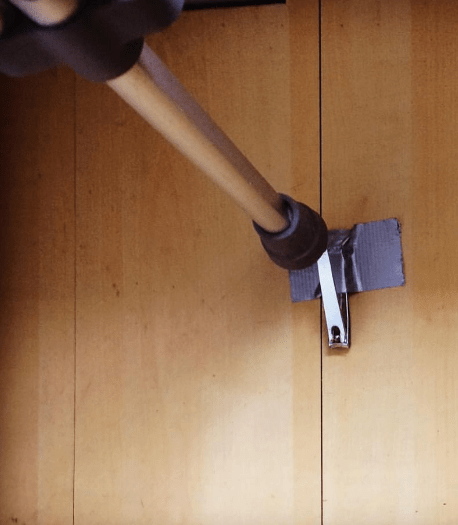
I also figured out that if I duct tape my nail-clippers to the floor, manoeuvre each toe into the six millimetre opening of it’s stainless steel mouth, and use my crutch to press down on the clipper’s lever like a hole punch, I could very badly trim the nails on the toes of my left foot in about an hour.
Screen Shot 2018-07-01 at 15.44.19

Also genius.

I suppose it would have been easier to hire someone to help, but trying to get my insurance company to pay for anything is the kind of frustrating bureaucratic fuckaround you’d probably have trying open a ‘Bed Bath & Beyond’ in Mogadishu. Besides, the prospect of a stranger being in my house, helping me go to the bathroom, shower and clip my nails, was not something I could stomach.

If you’ve ever been to a typical Dutch house you’ll know that you basically need rappelling gear and ice picks to get up and down the stairs — even living on the second floor afforded no easy exit from my flat. Of course, every two weeks I’d have to leave to make a trip to the hospital. This required my entire body and full concentration. At the beginning, it was “sitting” my way down the stairs. A noisy operation that involved me sitting on every step on the way down, while trying to keep my crutches with me. Usually, when I braced my hands against the steps to lower myself one more step down, the crutches would attempt an escape, clattering down the flight of steps, making my upstairs neighbour think people were attacking each other with hammers in a tin hall outside their doors.

It also meant I could not venture out with anything more than my crutches and my satchel which hung across my shoulders. I definitely couldn’t take garbage out, and there was absolutely no way to bring supplies like groceries and toilet-rolls in.

For the garbage and recycling, I relied on friends. For the groceries, I figured out that Albert Heijn (a Dutch supermarket chain) will deliver all the way into your kitchen. Budgeting for grocery delivery had me eating a very specific diet for three months:

Breakfast:
Banana and orange

Lunch:
Two slices of bread, one with aged goat cheese, the other with peanut butter

Snack:
Cherry tomatoes, baby carrots, hummus, peanuts

Dinner:
Microwaved veggie burger between two slices of bread with mayo and a side of potato chips.

To mix things up I’d switch up the flavour of the chips.

My beverages were vast quantities of water, coconut water, lactose-free milk and Leffe beer.

In hindsight, I suppose being effectively trapped in my flat and having a very repetitive diet was bit like being locked in a minimum security prison with a moderately better view, nicer ambient noise and less rape. It’s hard to say whether or not I went bonkers with all the isolation and limited movement. My friends who saw me may insist otherwise, but as an only child I may have been better equipped than most to handle entertaining myself during the weekends and long, empty hours after work.

It would be great to say that I used the time to read good books, compose guitar music, paint, write a novel or even keep a memoir of my situation, but I didn’t. I watched lots and lots of TV and films. I figured, I’m living with my fucking condition, why would I want to write about it?

Even now, almost a year later, I’m living with it, but to a far, far lesser degree. For example, Getting up from the floor is a huge hassle without anything to grab on to. I’m basically the American flagpole at Iwo Jima, requiring the remnants of a broken American platoon to get me upright. I try to not spend too much time on floors.

But whereas I could actually get up now, at the height of my incapacitation, even getting down — without face-planting, or executing an inelegant, backwards, Jesus-on-the-cross flop — was impossible.

That being said, the growing distance between then and now is making memories grow dimmer, and with it, the recall of day-to-day life from August to November of 2017… aside from the incident itself and what immediately followed. That millisecond moment that exploded my daily routine is branded into my mind for good. A massive checkered flag planted firmly in my life, like my first kiss, 9-11, or The Challenger disaster (not necessarily in that order).

I’ve often tried to come up with a way to describe the pain, and when I do, I relive it. Which is not what I want to do. Ever. Again. I’ve found myself backpedalling describing it to women who have had a kid. Giving birth, I’m told, is like crapping out a Fabregé Egg, or passing a wheat harvester through your urethra, or getting your crotch beaten by ten pneumatic sledgehammers, or other analogies. Whatever, all I know is that you do not want to get into a relative-levels-of-pain-experienced fire fight with a women who’s had a kid. Wait for the second kid.

How do you describe the very subjective concept of personal physical pain? It’s a weird thing having something so easily remembered and so difficult to describe.

There was a pop sensation. A jack-knife spike of pain that I felt viscerally. Like a starting-gun going off for things to come.

I had been invited to play softball — softball, a game for children and the infirm — by Greenpeace US against the Amnesty US in Washington, DC. We were going to play on the National Mall in DC. You know “The Mall”, it’s been in any film or TV show which features anything happening in the US government. Martin Luther King spoke about his dream over it, and Forrest Gump ran through it. I was going to play a national pastime near a international icon. Hell yeah, I’ll play.

Perhaps it was the running shoes, good only for running on a track. I had actually intended on jogging around the mall like a character from the West Wing. It was hot and humid outside, so there was a layer of dew everywhere and we weren’t on a proper sand baseball diamond. Basically, without cleats, you had about as much grip as silk sandals on ice. Maybe it was the rotation of my body on the swing. Maybe it was the act of planting my left leg and pushing off to make a run for first base. Maybe it was all of it, or maybe it was none of it.

All I know is that on my very first time at any plate in about 20 years, on my very first swing, with my very first connect with the ball, the knee cap of my left leg popped off and slid under the skin to the left side of my knee.
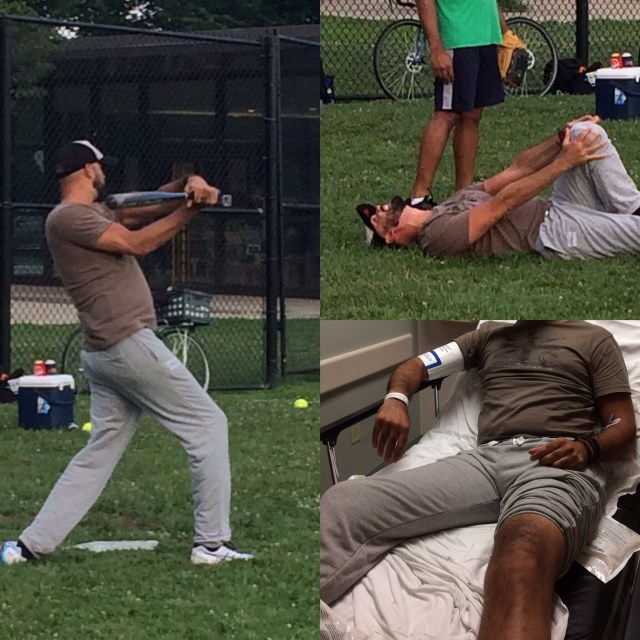
2B07CDBE-0025-4A7A-A71C-D5EBA5D772FF

Of course I didn’t know that’s what happened at the time. I think I thought I just wiped out. Except for the pop and the rapidly cohesive knowledge that something was very, very wrong.

The kneecap is fixed in place over a socket by a tough and taught bit of sinew called the patellar tendon. It’s egg-coloured and has the strength and tight tenacity of the fan belt on a car engine. It runs from that big meaty muscle at the top of your thigh called the quadriceps over the patella — your kneecap — and attaches to the top of your shin bone— tibia. In the highly unlikely event that the patella pops to the side of the knee, the tendon moves with it, and all that brute tension that crosses the knee, suddenly jerked to the side of your joint, now pulls your ankle towards your ass.

Lying there on my back I was aware of three things: a pain so extraordinary it caused my brain to careen wildly between processing the agony and trying to figure out what the fuck had just happened, the sensation of feeling my knee cap where it wasn’t supposed to be with my left hand, and laughter.

Objectively speaking it probably looked hilarious. I essentially swung a bat, hit a ball and then collapsed to the ground like I’d been tazed. A middle-aged, out of shape dude, who used up all his energy in a single swing. I was vaguely aware of people wandering over, probably thinking I was doing the hammy fish-on-land flip-flop that professional footballers do when a breeze knocks them down.

I was acutely in need of relief from the pain and the ping-pong mental processing of the unnatural feeling of the position of my leg. Eventually it crystalized in my mind that the only respite was to get my leg straight again. Oddly, a quite lucid internal voice said, “That may be what you think will help, but you’re no doctor.” Or maybe I said something out loud and that was the response from someone in the crowd gathering around me.

I couldn’t straighten my leg though. The relentless tension created by the position of my patellar tendon wouldn’t allow it. Also, I was aware that I was starting to pass out — the edges of my peripheral vision were getting fuzzy. So, using my right foot I kicked my left leg straight and rammed my kneecap back into its groove.

Relief!

But not a lot. I could feel the knee cap would snap out of position again if I tried to bend my leg. And I was getting very dizzy. I needed to concentrate on a task. A task like self-care. I needed a splint – something to keep the leg straight. I looked around the field. Between gasps I asked for someone to bring me one of the baseball bats. Something to secure the bat… something to secure the bat. Belts! I need belts. The NGOers gave me belts.

I lashed the baseball bat to my leg above and below the knee. Likely numb due to shock I somehow got it into my head that things were fine — that I could uber to a hospital. With that in mind a few folks got behind me to hoist me up.

Pop.

The kneecap snapped out of place again. Jesus. Jesus, put me down, put me down.

Thankfully the splint kept the leg relatively straight, so shoving the knee cap home was easier. As I was tightening the splint I realized that I would need an ambulance.

Aside from bottom-feeding accident claim lawyers and chronic hypochondriacs, who really wants to ride in an ambulance? Not only was I aware that in the US I’d probably have to donate a kidney to afford an ambulance ride to the nearest hospital, but there is something supremely undignified about being the recipient of emergency medical response care. Like you’ve so totally and helplessly lost control of your personal situation that it requires the arrival of a loud disco-lit truck and a team of people with invasive contraptions to put things back in order. After watching the ambulance drive around the park for about ten minutes as it tried to find an access route to where we were in the park, I was hoisted onto a gurney, baseball bat splint and all, and the gurney was shoved unceremoniously into the ambulance.

The person who had invited me to play softball in the first place rode with me. She felt awful. I told her it was my choice to play, and to not feel bad as I clung to my kneecap, refusing to let go out of fear of it making a dash for it, like a vole under a sheet cover.

Hospitals are horrible places, and the George Washington Memorial was no different. I was told to fill out a stack of forms and liability documents in case I died in the process of them doing whatever it is they needed to do to my knee. Which, as it turned out, was not much.

The form of care looked like this.

I was parked in curtained-off room while my travelling companion started trying to sort out traveller’s health insurance on her phone. Eventually she said, hey, I think you may have this, and showed me a Wikipedia a page called “patellar luxation”. After that a few folks in white lab coats would occasionally stick their head through the curtain, stare at my leg without approaching it and then leave. I believe word got around the hospital that someone had been wheeled in wearing a baseball bat for a splint and people were checking out my act for themselves. Somewhere along the way I was given morphine. At one point, I’m proud to say, one doctor — who could also have easily been a janitor for all I know, I was so high — said my splint was exactly the right thing to do. Then my travelling companion told me an extremely vivid story about her trip to the museum of African American History. Then I was x-rayed. An orderly came and put a brace around my leg to keep it straight then a doctor arrived. He told me he thought I had a patellar luxation and handed me a print-out of the exact same Wikipedia page I had been shown three hours earlier by my travelling companion. The doctor also told me to give it about six days and I should be fine.

This mind-boggling level of high-end, privatized, expert American medical treatment cost me 777 USD. I would later be charged an additional 2000 USD for the ambulance ride. Also, because I was a foreigner, they wouldn’t let me leave the hospital until I paid. And the longer I stayed in the hospital the more they would charge me. It was like being stuck inside an Escher painting that smelled of disinfectant. People have said this far more eloquently than myself, but after having actually lived through it, it bears repeating: The US medical system is fucking retarded.

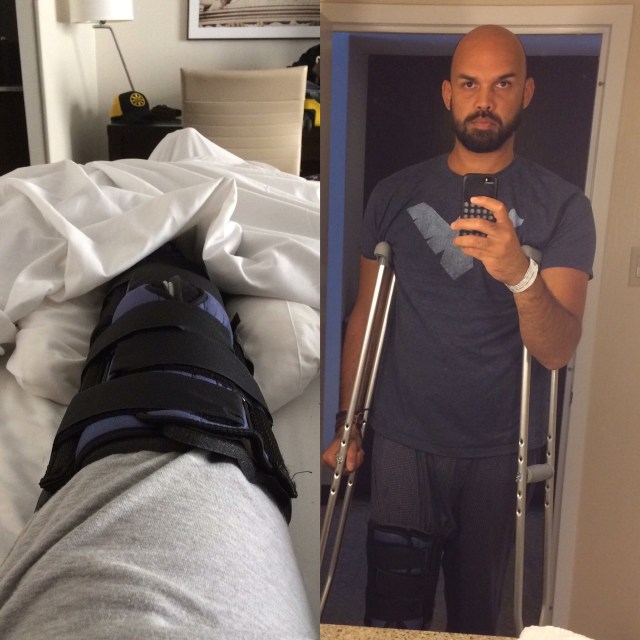
After some idiocy with my credit card limit I paid and left with a pair of crutches, a knee brace and the realization that the coming days were going to be absolute shit.

Also, they didn’t secure the brace well enough. When I got back to my hotel room, where I would spend the rest of the week, I tried to sit on the bed. Pop.

You’d think that I would be an expert at dealing with that level of pain at this point. But the morphine had worn off and as I, again, kicked my leg out and popped my kneecap back into place, I started sweating profusely and seeing stars.

The rest of the stay in the hotel room in DC was a dull-as-cardboard repetition of over-the-counter pain-killers, water, ice and Oreo cookies, all delivered by very fine colleagues. I watched a steady stream of art documentaries on YouTube while drifting in and out of sleep. This was punctuated by moments of raw rage at my condition and replacing the ice pack. I was afraid of moving at all — so I really didn’t move, maintaining the exact same semi-reclined hospital bed position, even in sleep — for about four days, out of fear of dislocating my knee again.
C9D97AC5-96F5-4C09-8B35-FA281860B0FA

I did manage to do a wet-towel cleaning of my body once, seated on the bathroom floor of the hotel suite, my leg extended straight out on a bunch of towels I threw down. They had affixed the leg brace over the jogging pants I wore and it was starting to offend anyone that came to visit me to drop off more pain killers, Oreos and water.

I was just waiting to get home. And that day did eventually come.

But not before my knee cap popped out again while trying to get some trousers on. This time I screamed. It wasn’t just about feeling like my knee was being smashed between two bricks, it was frustration at being lulled into a false sense of improvement because of my immobility the previous four days. The roar of anger, frustration and pain was enough for someone to knock worriedly on the hotel room door and ask, “Is everything okay?” with the same tone you’d use to address any closed hotel room door in Washington DC behind which you’d heard a scream.

They had to order a Ford escalade, basically an urban tank, to get me to the airport because I could no longer fit normally into a car. I had to be able to sit across the backseat bench, my back against the passenger window and have my crutches with me. This would continue to be a hard thing to explain to any taxi service I’d need the following months. It also meant that my jogging-pants pocket was well positioned enough for my mobile phone to fall out and travel back to DC without me.

I didn’t realize that little pearl until I reached for it at the airport to indicate that I’d been re-booked onto a first class flight back to Amsterdam. Which sounds better than it is after you’ve considered the practicalities of trying to fit me anywhere on a flight, besides the aisles and the cargo hold. As it stands, even without dragging around a large and useless limb, I can’t fit into airplane seats.

Or wheelchairs either, it turns out. Apparently it is airport policy that people at a certain, slightly arbitrary, level of diminished physical capacity must be wheeled around in a wheelchair. The problem is, wheelchairs are not designed for someone whose leg doesn’t bend. Not unless you’re trying to create forward momentum to catapult them over a fence by using the outstretched leg as a vaulting pole. I ended up sitting with one ass cheek on the armpit end of the crutch with the business end sticking straight out so that I could rest my leg fully outstretched. The whole setup looked like a wheeled joust machine designed in an orthopaedics’ lab.

In Schiphol airport in Amsterdam I was met by the tiniest airport staffer I’d ever seen. She had been designated to wheel me and my suitcase. You could probably have fit two of her into my suitcase.

Christ, talk about feeling guilt at having this poor little human struggling to push me with one hand and pull my suitcase with the other. We both learned that because of my long horizontal length we both couldn’t fit in the elevator. She’d have to position me to maximize the diagonal width and use the tiny remaining room around me to fit my suitcase. This took a few tries and all had to be done with the elevator door constantly wanting to close as people in the floor below hammered on the lift button and cursed it’s lack of arrival. She’d also have to race to the nearest stairs and down a floor to be able to meet me when the elevator door opened again.

Throughout all of this she remained upbeat. Between gasps of air at the effort of wheeling me and my stuff a fairly great distance she did her best to try to maintain light banter. It was an impressive display of personal fortitude, patience and sheer, brute strength.

In many ways I’m grateful that my travel insurance was based in the Netherlands. Things just work here. Although they couldn’t pay off my medical fee at that moment they sorted out my flight back to Schiphol, tiny airport attendant in Amsterdam and very large cab back to my flat.

I’m still a little dubious about the orthopaedic health care I received. I’d never heard of my kind of injury until it happened to me. I had and have no basis of reference aside from what I’d read online – which in and of itself wasn’t very helpful. Recovery time, for instance, could take between one week and two years. Treatment was anything from a compression sock and re-hydration, to replacing the entire leg with one that works.

Before even getting to the point of seeing an expert I needed to hobble, on crutches to the nearby general practitioners office to get a referral. This involved, again, getting in and out of a cab, which, if I were a few inches taller would have required me having to stick my leg out the passenger side window like a surfboard in Malibu.

Nothing actually happened at the GP’s. I turned up, she said, what’s wrong, I said, patellar luxation, she said, okay, we’ll get back to you with some specialists you can go to. I turned around with the grace and speed of an aircraft carrier and hobbled back to the car park. About two days later I got a call from someone at my GP’s office asking me if I wanted a meeting with an orthopaedic surgeon in “two weeks or in one month”.

I said, I want to see one right now. I explained that I’d rather not be stuck like this; unsure if my kneecap is actually where it’s supposed to be, unsure if all the continuous swelling is supposed to happen, unsure if I’m healing correctly or at all, with no idea what the treatment is or when the leg brace can come off (you fucking idiot)…

And, as always happens in the Netherlands, she had low-balled me at first with the least convenient option, forcing me to haggle like I was in a Kasbah stable trying to buy a camel. It turned out, that an orthopaedic surgeon could see me the next day.

My treatment felt a little absentee-fatherish. I saw the orthopaedic surgeon twice in about seven trips to the hospital; the first and last trip. The three other times I saw any doctor it was his trainee who appeared to be about 14 year-old. The kid had zero sense of humour and an expression like he was suppressing a gag reflex whenever he came within a few feet of a human. A splendid quality for a health care professional. And there’s nothing quite like that moment in life when suddenly the doctors — the people who you empower to handle your health — are younger than you.

The orthopaedic surgeon strode into examination room and I suddenly got the uneasy sense of being in a small space with a sociopath. He probably wasn’t, but there was a cool detachment which I found a bit unnerving. He looked at the knee and said that he couldn’t really tell what the situation was, but that I should start doing physio, get an MRI and head to the “mechanic” (loose Dutch translation) to get fitted with a new knee brace. The logic was that every two weeks I’d return to the hospital and the mechanic would adjust the hinges of the brace to allow for another 30° of knee bend.

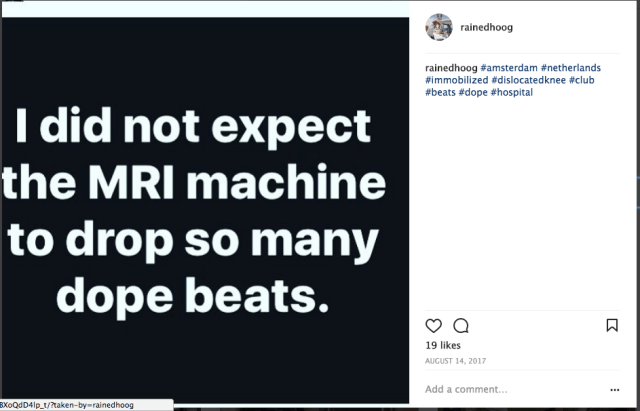
All well and good, except when I went to the physio she stared blankly at my knee and said, we can’t build the muscles around your knee if you can’t take off the brace to bend your knee. The MRI resulted in nothing clear except for providing me with what I thought was a hilarious social media post. The 30°-every-two-weeks scheme didn’t work in a way that made it seem a bit ad hoc.
Screen Shot 2018-06-29 at 17.30.58
Trips anywhere fell to “my driver” who was actually just a guy with a big taxi who I got into the habit of calling. He was into some kind of L. Ron Hubbard style new wave religion thing and had a tad too much affection for the Third Riech. He had a tendency to tell me about the interconnected of everything and the things he thought the Nazis got right. Genocide was not one of them.

The most significant medical breakthroughs and personal steps (ha) forward had nothing to do with the doctors. The place where the magic happened was at the mechanic’s. At first I was a bit sceptical of a guy with no medical degree telling me, after about six weeks weeks, to try to take a few steps without the crutch. I would try, very gingerly, and holy hell! I could! The leg muscles had atrophied quite a bit, but I had bought a cane to help me along. Before that he had encouraged me to only use one crutch, which turned out to work as well to my happiness and shock. The man was like Jesus to me.

He also gave me what could only be described as a massive condom to fit over the brace for taking a shower. Getting the thing on was similar to getting my trousers on — horse shoe lobbing the things at my feet until it caught, and then using the crutch to manoeuvre it up and over the brace. For washing the offending leg I’d have to sit on the floor of my tiny bathroom, the leg outstretched, now beneath the toilet bowl, take the brace off and wet-towel the limb. I still can’t remember how I managed to get to a standing position, except it had something to do with nearly wrenching the toilet bowl out of its fixings.

The scheme of adding an extra 30° bend to my brace every two weeks may not have worked as intended. When the brace finally allowed for that level of flexibility, I still could only bend it about 75°. Apparently my tendons and muscles had spent so much time in an extended position, they thought that was the new normal state of affairs. I still can’t get past about 130° so engaging in prayer in many religions is out of the question.

Medical equipment is a bit vulgar-looking, and the cream-coloured aluminium crutches were no different. They just looked ugly. They always had to be within reach and they were always falling down, making the kind of noise you’d get dropping a sack of tin cans into an aluminium bin.

I was dropping things more during that time. I know, because picking anything up from the ground required massive amounts of effort. It was par for the course when you’re trying to transport stuff from one room to room in a tiny flat with both hands occupied by crutches. When something fell to the floor I’d fly into a rage at a level usually associated with violent religious zeal. My neighbours must have heard my roars, but were too polite to say anything when they saw me months later wielding a cane.

Aside from trips to the hospital, exposure to the outside world was extremely limited. Occasionally I’d stand at the window, supported by crutches, and stare at the road and the apartment across the street like Jimmy Stewart in Rear Window. I actually went on a couple dates with someone. She insisted my immobility and big, dumb crutches wasn’t an issue, but texted me that she was leaving the country when, after a brief period of non-contact, I asked her if we were going to hang out again.

I figure I dodged a bullet there. I actually dodged another one when I had to break a promise to be there for an ex who was giving birth. Dodging bullets is not a skill you’d normally associate with a guy with the mobility of a stop sign.

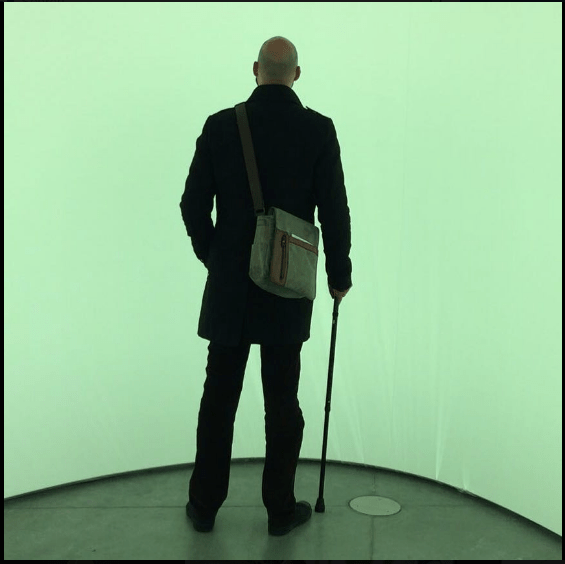
The transfer from crutches, to one crutch, to cane was an interesting one. It was like moving from the high school yearbook committee to president in five months. Where I was a clunky, stumbling mantis-shaped human with crutches before, with the cane I was an 18th century aristocrat explorer, freshly returned home. Everyone, including complete strangers, wanted to talk to me. I was given premium service in airports, and, when I was anywhere other than the Netherlands, offered a seat on public transportation.
Screen Shot 2018-07-01 at 15.43.53

Moments of progression came as surprises, and usually far outside of my comfort zone. Against my paranoid judgement I ended up going to Norway in November for work; managing to deal with the ice and long wanders for work and museum visits.

It wasn’t long after the cane days when I hiked a rat-bastard of a rocky trail up a mountain on Lantau Island in Hong Kong. This wasn’t planned and the fear of my kneecap popping off — rendering me immobile on a remote path on the opposite side of the world — constantly loomed, like a gun shot injury at a rifle show.

The fear of another patellar luxation — another pop — is probably not dissimilar to suffering from PTSD. That injury must never happen again. At any cost. The orthopaedic surgeon saying that for 60 to 70% of people it never happens again does not inspire confidence. Surgery was an option, if I insisted, but I didn’t because the prospect of spending another three months in locked-down, motionless recovery made me want to stick my head in a man-of-war jellyfish aquarium.

This is probably why my physiotherapists are gently trying to tell me to fuck off. They understand the fear and want me to trust my knee more and not waste their valuable time when they have people with real injuries who actually need them.

After all, I’d set my goal at the beginning of the physio sessions: to achieve riding a bike again, and, eventually, jog. I can and have been riding to work and everywhere, and I can almost jog again. That being said, I won’t be competing in any MMA matches.

I used to take stair steps two at a time and now I can only take them one at a time. And I still try to avoid being on floors as much as possible.

Posted in Uncategorized | 1 Comment

This IPCC meeting is very important: Part one

Significant progress made today at the Intergovernmental Panel on Climate Change here in Copenhagen, Denmark, Earth.

Between about ten this morning and mid-afternoon it was decided that the panel should use the colour yellow to highlight certain words in order to clarify that those words actually exist. And this is only the introductory paragraph of a 30 page report.

Somehow this doesn’t quite mesh with the word ‘finalize’ in the statement released by the IPCC press office:

The Intergovernmental Panel on Climate Change (IPCC) opened a meeting in Copenhagen on Monday to finalize the Synthesis Report, the last stage of its Fifth Assessment Report (AR5), which provides policymakers with a comprehensive assessment of the risks of climate change.

‘Finalize’ to me is the… well… final step to getting something done. Arguing about font size sounds suspiciously like getting nothing done.

Here’s the scene:

The room, about the size of your average theatre where you’d see a top bill comedian, is filled with politicians and scientists. The Scientists have mashed together their previous three reports into a single, mighty uber report. The previous three reports are all made up of even more scientific reports by thousands of scientists and their dire findings about how we’re all going to die from climate change.

So what we have here is a summary of summaries based on the summaries of people that measure things like “hydrogen ion concentration” with a “logarithmic scale” .

This summary of summaries is projected onto a massive screen behind the heads of about seven panellists who have the thankless job of defending their wording. They are using ‘track-changes’ in MS Word, and the operating system seems to be Windows ’93.

The ‘Imax’-style projection is to facilitate the launching of polite spitballs by the politicians who have flown from places as far away as Saudi Arabia to establish whether ‘trees’ or ‘largish plants’ should be used to describe what’s being deforested. Keep in mind, people get paid many moneys to do this.

To me, the chasm between what scientists want to say and how politicians want them to say it can best be illustrated by government-sanctioned monkeys trying to re-write a Beethoven concerto with Beethoven in the room.

A moment ago one of the scientist/panellists, exhibiting Nobel prize-winning passive aggression, was forced to define what a “statement of fact” was. Although, to be fair to the delegate who asked for the clarification, a politician who knows what a “statement of fact” is would not be a very good politician.

So, the scientific panel is faced with the impenetrable plodding nature of the process, and have to say things like, “Can we all at least agree to maybe get something done today.”

They have, in true scientific fashion, provided this helpful graph of the progress so far:

IPCC words v time

For me, I’m just trying to wrap my head around the fact that the aim of the final report is to warn politicians about the dangers of climate change. With that in mind, knowing that a couple hundred politicians are here to pick through a scientific document for other politicians to read, seems self-negating. It may be vetting in principle, but it’s more like neutering in practice. It’s a massacre of meaning, as every statement is designed to make politicians act has all of it’s gravitas sucked out of it so that their electorate don’t ask, “Why the fuck didn’t you do anything about this?” from below about 13 feet of water.

Why not cut out the middle-man? I imagine a Clock-Work Orange-style re-programming scenario with the intended audience’s eyes pinned open as they are forced to read page after page of the original document with… yes… Beethoven played in the background.

Posted in Uncategorized | Leave a comment

Chinese smog, the joke’s on us. Kind of

CNN smog-artist-story-top


Contrary to popular belief you can’t see the Great Wall of China from Space. Even China’s own astronaut, Yang Liwei, said he couldn’t see it and you can imagine how hard he tried. According to NASA, even low orbit crafts, like ballistic missiles and Richard Branson, can’t see the thing.

In fact, due to all the air pollution, it seems that lately you can’t even see China from space.

You can see China in the news, however.

Pictures of polluted cities like Beijing, Jinchang and Linfen are a scary sight to behold. Or they would be, if you could actually see anything. I’m reminded of the hilarious coverage of the men’s downhill at the 2010 Winter Olympics in Vancouver on a foggy day when all you could see was a CGI stopwatch, the name of the skier and the time he had to beat. All of this was superimposed over an utterly white screen where you were told something ski-like was happening by an earnest sports commentator.

China’s situation is quite different from Vancouver’s, of course, because it’s a mustard-colour-out instead of a whiteout and it’s not hilarious. The media has been keen to remind us of the non-hilarious nature of the Chinese pollution story. Coverage has ranged from the horrified to the smug – rarely the comedic or the satirical.

The seriousness of the situation there can be underlined by the Chinese government giving the Chinese government a failing grade on environmental protection. Considering the Chinese government still hasn’t given itself a failing grade for the Cultural Revolution – a time when “having some Chinese” had a whole new meaning – this is a pretty remarkable forehead smack.

Of course, talk is cheap, and the Chinese government, under the bemused, side-long look of Western mass media, did a lot of talking. It wasn’t until March 2013 – three months after the smog became so thick the term ‘blind date’ became ubiquitous for any couple going out together – that the National People’s Congress announced that there was something stinky going on with the air quality. They also announced that they could predict danger-smog two days in advance. As visibility was quite low in the government buildings that day, however, the announcements may have been made to a tricycle.

Six months later, the Central Government unveiled their “Airborne Pollution Prevention and Control Action Plan”. Although, reports showed that, for the time being, it was less “action” and more “plan”. Nothing else happened until February of 2014 when, as Reuters reported, China sent “teams of investigators to parts of the country worst hit by air pollution as part of efforts to stop the heavy smog engulfing about 15 percent of the country.” Possibly this could be interpreted as action, but only in the same way a cow standing in warm water could be interpreted as stew.

After this we didn’t hear much about China and its smog. It’s not as if the smog had stopped, it’s more that everyone was waiting to see what the investigators came back with. If there were investigators at all. The Central Government could easily have been using the old beleaguered married man’s trick of saying he’ll “do the chores in a bit” to buy a few more minutes of scratching his belly in front of the television.

You’d think that the millions of Chinese people suffering from, what can only be described as months of industry-sanctioned tear-gassing would be the sum total of victims involved. You would be wrong. The people most hurt by China’s massive pollution problem were the Western journalists trying to cover an issue two years in the running.

Hyper self-conscious of running the merry-go-round of repetition, news sources often go apoplectic trying to find a new angle for the same old story. This kind of psychological strain is known to have sent many fine journalists into the reporters’ version of Abu Ghraib: writing copy for advertising agencies. Luckily, people all over the world chimed in with ideas on how to beat Chinese air pollution. Many of them, apparently, using the same play-book Wile E. Coyote used to try to beat the Road Runner.

The International Business Times reported on a proposal to position “sprinklers on the roofs of tall buildings to spray water into the atmosphere to collect particulate matter, similar to how rain removes airborne dust.” Because the only thing that beats breathing it in, is drinking it down. CNN looked at “an electromagnetic field generated by copper coils [which] will pull airborne particles in the smog to the ground where they can be easily cleaned.” Aside from the field also drawing anybody nearby wearing jewellery to the ground, CNN weirdly topped the article with a photo of some guy flipping the bird at the sun (pictured above).

Other solutions included a giant vacuum cleaner, as made famous in the movie Space Balls and a bicycle which sucked in dirty air in the front and blew clean air out the back.

The Chinese government, not to be out-wackied on their own turf, shifted straight from first gear to fourth and proposed levelling mountains to allow the trapped smog out. Speaking of trapped smog, last month The South China Morning Post headlined “China to build ‘world’s largest’ smog chamber to solve pollution puzzle”. No updates this month on that bit of investment. One wonders if they ever did manage to find the additional smog to fill their chamber.

Also, frighteningly, the Government is seriously considering raising the ante on the building-sprinklers idea – by trying to make actual rain fall from the sky. The Washington Post, half way down their article, said, “Beijing’s vice mayor told subordinates his city was researching the method.” Farther down, the Post went a bit Twilight Zone – describing an already existing “rainmaking force” of which China has the largest. It is composed of “6,902 cloud-seeding artillery guns [and] 7,034 launchers for chemical-bearing rockets.”

Huh?

I may have been out of the journalism game for a couple of years, but not long enough to know, that’s your story right there, Washington Post: China has the means to mess with the weather and they have a lot of it. This isn’t just burying the lead, this is taking lead out back, shooting it, pissing on it, tying it to a concrete block and then dropping it into the Mariana Trench.

It’s hard to single the Post out for missing the story, though, a lot of publications did.

While much fun can be had with adaptation to the problem – like providing air-pollution insurance for people visiting China – the mitigation aspect is far more awkward.

The fact is, air pollution in China comes from the millions of factories in the country which are making stuff. Stuff for us. Stuff like iPhones and fridge magnets and table lamps and car mufflers and dog bowls and baby strollers and adidas and little corn-on-the-cob-shaped corn-on-the-cob pinions. You mitigate the problem – deal with it before it begins – by closing the factories, or making them go green. But then, while the greening happens you may not be able to buy as much stuff, for as cheap. And…well…that’s just not happening.

Meep meep.


Roadrunner


Posted in Uncategorized | Leave a comment

COP19 part VII: The little UN thing that could

boneless

So, a bunch of NGOs walked out of the UN climate negotiations today. They were the so-called C7, some of which include Oxfam, WWF (the animal lovers, not the wrestling association), Friends of the Earth, Greenpeace, Christian Aid and a few others.

There was a press release which was sent to journalsist on behalf of the C7 which basically said that the entire Stadion Narodowy was filled with maggot sycophants who brainlessly dance to the tunes of fossil fuel fiddlers. It blasts the Finance Ministerial for having no discussion about actual finance, the loss and damage talks for being stymied by people that live high above sea level and – getting a bit existential – the COP 19 itself for being a construct of the very people who should be taken out back and shot.

From a certain point of the view, the general expectations of the NGOs about this COP were fairly reasonable. They accepted the whole “let’s all plan to make a plan,” thinking which I wouldn’t even accept from my grandmother. They accepted all the things that follow that; like trying to make dashes on a decade-long timeline on which plans to plan will definitely be planned. They accepted that their consultation was only listened to if it sat squarely in a pre-existing agenda. They knew there would be deal-breakers, side steppers, ducker, weavers and outright liars.

They wanted countries to promise – a word that notoriously flops out of politician’s mouths like dead fish from a sewer pipe – to reduce their emissions from charcoaling lungs to merely blocking nostrils. Generally, they wanted the place to be a venue of change, not a Xanax-driven reunion of apathetic suits.

A large part of the angst that drove them to leave has to do with their expectations. Some of the NGO players here have attended every single COP since it was a little baby – when they themselves were considered to be a bunch of hippies and everyone had two-and-a-half kids, a car and a job at the asbestos plant. Those were hopeful times, when climate change was considered the fantasy of tree-huggers and mushroom trippers, and wearing neon and silly pants was acceptable.

But the hippies are now in suits and have PhDs in biochemistry and market analytics and degrees in international law. While the same people who have to make the important decisions at the UN climate talks today, are still making decisions as if they still lived back then.

Somewhere between COP11 and now, the hope has been replaced with the kind of burning anger usually reserved for public transportation and smug people. The result is that every year they downgrade what they hope the decision-makers do, and every year the decision-makers manage to find a newer low to achieve. This time, going into COP 19, the expectations were downright subterranean – applying the amount of hope you’d give a monkey trying to solve a Rubik’s cube in the midst of severe heroine withdrawal.

What it does affirm is the need to for NGOs to do NGO-type things, like climb oil rigs and make you depressed with pictures of rabbits wearing badly applied mascara. The goal being to mobilize people to actually do something when the people that should don’t.

I made the same complaints I’ve been ranting about in my past six entries to some of my much wiser colleagues. They tend to agree with me, but with the caveat that these types of discussion need to happen somewhere, so they might as well happen where they are supposed to happen. They also talk about the much finer conundrums that the rest of the world would find too complex to handle; like, what if an entire population has to move somewhere because a nearby desert started creeping up on them like a flasher on an empty street. If they’re forced across a foreign border because too many fat people drive cars on a different continent, do they then lose their sovereignty? How will they be settled? Will the settlement become a new state? And what about the state they moved into; do those people then lose a chunk of their land to chapped-lipped migrant strangers?

See? You’re glazing over already. These kinds of nuances have no explosions, no celebrities, no baby pictures and no place at the dinner table. But they are the things, it turns out, which need to be discussed. They are also the things that, despite making an entire profession out of it, still drives policy-makers into Stubborn Onset Catatonia. More ‘policy’ less ‘maker’.

The thing is, however the subtlety of the discussion, or the fragility of the politics involved, you, me and everyone else, can point at the people who are supposed to make the important decisions and say, “You fucked up.”

19 years of doing that, to the same kinds of people, and yeah, you might finally walk out.

Posted in Uncategorized | Leave a comment

COP19 part VI: The little UN thing that could

Roxanne,
You don’t have to wear that dress tonight.
Walk the street for money,
You don’t care if it’s wrong or if it’s right.

–The Police, 1978

Apparently some people think that when you have a locomotive that’s going nowhere it’s a good idea to throw the engineer into the furnace.

That’s pretty much what happened today. Mr. ‘I Fondle Coal Lovingly’ Korolec, the Environment Minister of Poland, will now be referred to in the past tense. He was unceremoniously sacked in the middle of the UN climate conference which he helped organize. Well, there was slight ceremony; the Prime Minister of Poland held a press conference in which he said, “I sacked the Environment Minister. This is the new guy,” while fondling a lump of coal he keeps handy for special occasions.

The new guy’s first words as Environment Minister of Poland were essentially that he planned on fracking Poland so hard the whole country would break apart like crackers under a hydraulic hammer. Here, in the conference center, if you listened really closely, you could hear the sound of synapses misfiring throughout the building.

You may have heard of the G7, G8 and G20? Let me introduce you to the G77; the group of small island nations who have had to adopt wearing hip-waders as part of their traditional attire. They’re here to negotiate the terms of ‘loss and damage’. It’s a hot topic in a hot world (har har). The idea is that, if they – despite taking the best available steps to keep it from happening – suddenly find themselves under six feet of water, they can ask for money from a central fund. Essentially, it’s insurance on their insurance, using the basic calculation that burning fossil fuels leads to climate change and climate change leads to a lot of people standing around with toilet water up to their necks. Following on this, if they are victims of the developed world’s politicians crack-whoring to the fossil fuel industry, they may as well get some cash out of the deal.

Naturally, the crack whores are less than eager to pay if they’re not getting any crack out of it. So at six this morning, after negotiating for more than twelve hours, the G77 got up, gave the crack whores whatever their version of the finger is, and walked out of the building.

Frankly, when you consider that they’re only seeking compensation after bad weather breaches their first lines of defense, I think all 77 of them showed quite a bit of restraint. If I was with 77 people that were annoyed at the same thing I was, I’d seriously consider forming a mob to pelt the developed countries’ delegations with wet objects we’d found around our homes.

Today the bathrooms were packed with men in suits who had just shit themselves. The reason: China announced that it was “seriously preparing ground for its post-2020 mitigation contribution.” In plain English, this means that they’re trying to make a plan to help out the G77 when things get shitty. I’m not sure why this caused such a stir for a few reasons: One is that currently parts of China are so shrouded in polluted smog, cases of mistaken identity run amok. Paying the damages when chunks of that smog float over and roost on Taiwan seems fairly reasonable. Another is that ‘preparing ground’ sounds suspiciously like one of those overly used non-committals, wrapped in tentativeness, coated in fairy-dust sentences you hear a lot of. In fact, most of the stuff that’s said around here is so slippery you need a javelin to pin it down.

But, I guess in light of countries like Australia and Canada – so called ‘Annex 1’ because they are developed, produce pollution, can apply a carbon tax and should pay into the loss and damage fund – congratulating each other like retarded frat boys for giving a grand ‘fuck you!’ to carbon taxes and small Islands, and the EU’s pathological commitment to stumbling into itself, China’s ‘preparing ground’ sounds delicious.

Posted in Uncategorized | Leave a comment

COP19 part V: The little UN thing that could

The night they drove old Dixie down,
and the bells were ringing.
The night they drove old Dixie down,
and all the people were singing.
They went, “La, la, la”

– The Band, 1969

It’s a tricky thing to confuse boredom with hopelessness on the human face, yet I seem to be doing exactly that. The other possibility is that, with the endless meetings, side-meetings, plenary sessions, focus groups, negotiations, closed groups and open groups, combined with the generally stationary nature of anything that happens here, it’s hard to avoid feeling a bit of both column ‘a’ and column ‘b’.

I haven’t seen it in too many other places, until recently. It’s the same look of boredom and hopelessness I’ve seen in pictures of the faces of 30 of my friends and colleagues. And they’re all in prison in Russia.

Here in Warsaw, at COP19, I’m starting to see it in the room where all the NGOs meet to discuss what the NGOs are going to do about the wrong-way-up-the-escalator style of getting things done around here. Generally NGO people are pretty chipper, “let’s go get ‘em!,” shiny people, so the relative mood today was a stark contrast to the beginning of the conference. It didn’t change the fact that, after whatever it was that needed to be decided got decided, the NGOs would just do whatever they wanted anyway. No matter how much everyone in the room wants to save the world, you can’t help but think your way of doing it makes the most sense. And what is standard nom de guerre splashed across all NGOs by the outside world, becomes competing notches on a bedpost within the NGO community.

Anyway, the NGO meetings themselves remind you of the high-school classes where nobody bothered bringing their assignments in. The assignment in this case being to take notes and share their accrued knowledge with the rest of the class.

There are hundreds of wildly interesting sessions running at the same time throughout the Stadion Narodowy, where COP19 is happening. Michael Bay explosion-engorged blockbusters like “Consultation under the authority of the President on programme” and “Credible policies to achieve climate targets cost effectively and [sic],” which makes you wonder what the “Incredible Policies” session would be like, and where the rest of the title of the session went.

The expectation is that you return to the grand NGO meeting with your notes from one of these sessions. The thing is, nobody does. So what you get is a guy plaintively going down the list of sessions saying, “Did anybody attend the negotiation on gender-based mitigation of high grade model I jet streamed impacts on planetoid structures?… Anyone?… Anyone?… Hokay then… Did anyone go to the Dubious rendering of splatter graphs illustrating the two pronged approach of tidal incomings?… Yes?… No?… Alrighty then… Are you sure?… come on guys. Did anyone…” and on, with increasingly awkward pauses, and the general feeling of being an extra on Ferris Beuller’s Day Off.

Hilariously, I thought, but nobody else seemed to – someone actually had a very loud recording of a cricket which they played during the long silence after one of the moderator’s hopeful request.

“All right, who did that?” said the moderator. “Please don’t do that.”

That nobody else laughed, I feel, is a testament to the boredom/hopelessness that hung thick in the room.

The NGOs, apparently, weren’t alone in their despondency. I was speaking to a member of the delegation of a small European country. He said, “The mood is bad around here, man. The people don’t feel any hope. They are lethargic and tired.”

I asked him if it was this bad, this early, last year. He said, “Ehm, no.”

Strangely, I may have stumbled on the cure today: Go stand in a booth.

The organization I work for has a booth set up at the conference alongside several other booths from several other NGOs. It’s meant to be unmanned, but because I got kicked out of the press room for having the wrong badge I went there to sit and try to get work done.

Whether it be carnivals, high-school science shows, or muffin stands, there’s something about being in a booth that makes people want to stop and talk pleasantly to you. First they come and look around at the briefs and reports you have on display, then they tentatively start to engage you. People talked to me about my organization, people talked to me about climate change, people talked to me about their booths, people talked to me about the conference, people talked to me about their family, their hopes and the country they are from.

Our booth had buttons to give away for our extremely high-profile war with a Russian oil giant which left a bunch of friends and colleagues in a Murmansk prison. Whenever I felt like not enough people were visiting the booth, which didn’t happen often, I’d scatter a few buttons around and people would come and cluster around like pigeons. The people at COP19 like free stuff.

My thinking is that if I offered a button to anybody that got anything done policy-wise here, there will never be another COP again.

Incongruously, or maybe not, considering all the twisted things involved in making this climate summit a reality, there was a booth a little ways down which was dedicated to climate skepticism. I’m not sure if the guy was serious, or he just liked being spat on.

Even the coal-obsessed, Donald Tusk, Prime Minister of Poland, who’s address I watched today, said climate change is a reality. At least, I think that’s what he said. The guy doing simultaneous translation in my headphones sounded like he was just making shit up – doubling back on himself and switching the word “can’t” with “can” and “reality” with “abstract”.

UN Secretary General Ban Ki-moon also delivered a speech, and I’m pretty sure he pulled a fast one on his Polish hosts. During the long ubiquitous platitudes directed at the amazing Polish country and it’s amazing Polish leadership, I distinctly heard him say, “I recognize the Polish government’s strong commitment for climate change.”

He’s not a native English speaker, but he’s been at this game for a while and knows what he’s doing. I wouldn’t put it past him. Later on, he said that he visited Iceland and was shocked at how rapidly the glaciers there were melting. Then he said he was afraid that when he returned in a few year’s time the place would just be called “Land.”

Ha.

Posted in Uncategorized | Leave a comment

COP19 part III: The little UN thing that could

It is the 19th COP, Mr. President, but we might as well stop counting, because my country refuses to accept that a COP30 or a COP40 will be needed to solve climate change.

–Yeb Sano, Head of Philippines Delegation. 11/11/13

There are people that spend their lives devoted to the next COP. They have read all the briefs, reports addendums and statements put out by national and international institutions which have been stripped down to their bare acronyms.

They speak legalese, politicese and consider reading things like, “In accordance with the “Guidelines for the preparation of national communications by Parties included in Annex I to the Convention, Part II: UNFCCC reporting guidelines on national communications”, at a minimum Parties shall report a ‘with measures’ scenario, and may report ‘without measures’ and ‘with additional measures’ scenarios. If a Party chooses to report ‘without measures’ and/or ‘with additional measures’ scenarios they are to use tables 6(b) and/or 6(c), respectively,” a perfectly acceptable way to pass time.

I am not one of these people.

The result is that I never have any idea what anyone is talking about. I recently watched two of my colleagues have a conversation with so many numbers, acronyms and referrals to obscure briefs I started to feel my brain slide down my gullet. That’s when one of them broke off and said to me, “You know, I often have to have someone there to explain to me what’s going on.”

If he doesn’t know what people are talking about, where does that leave me? Post-lobotomy comes to mind.

The halls, galleries, salons and auditoriums are filled with these people. At least, everywhere except the press room. This is where most of us spend our days; either hammering away at a keyboard, staring blankly into the middle distance, or curled in the foetal position under our desks.

Admittedly, I haven’t actually visited a plenary session yet. I’ve only watched them on the large TV in the press room. This alone has firmed my intention to get steaming drunk before I actually do. However, I have asked around for the inside scoop on these things. This is the way a plenary session appears to work:

Anywhere from five to 500 people all sit in an auditorium facing a raised platform. They are the delegates; chosen by their respective country to represent their country’s interest. They have been chosen, not only because they own a suit, but because they have achieved high marks in their respective country’s Stubborn Nitpickers Test. Upon the raised platform are other people in suits who moderate. There are about eight of them. Everyone is there to come to a decision about something.

Are you starting to see a problem here?

Mere mortals, like you and me – and as long as you are NON-GOVERNMENTAL, PRESS or PARTY (see here) – are allowed to attend the open session. This is the time when they “discuss”, let’s say, a proposal made by Brazil (a developed country) about how much cash they’d give to Micronesia (a developing country) if all the islands were sucked into a sinkhole due to ocean-floor mining for minerals. The answer, by the way, would be: None.

After a long introduction by the lead moderator, he offers the floor to anyone who wants to comment on the proposal. Inevitably and unfortunately, someone always does. But before they get into the actual comment they must, by some unspoken agreement, give a long, and often Oscar-worthy thanks to everyone in the room, the organizers, the country they’re in and their home country. If they are following-up on someone else’s comment there is a diplomatic, deeply heartfelt thanks to the previous delegate’s contribution before they proceed to eviscerate them with the same zest as a hyena with an antelope carcass:

“I respect the cherished, esteemed, well-adjusted and highly intelligent delegate from Thailand’s comment concerning the fact that he too comes from a small island with the same challenges, such as being entirely submerged by a tidal-wave, but he is a worthless piece of toilet slime who knows nothing and should be immediately removed from the room for stealing my oxygen.”

When they finally do get around to the actual comment it’s usually some nitpicky stuff about the use of the term “clean water” instead of “potable water” or “life-raft” instead of “life-boat”.

All five to 500 people get to do this, or comment on someone else’s nitpickyness with nitpickyness of their own. Or do both. This is probably why they need so many moderators; five to hold the delegate down, two to pry their mouth open and the last to hold their tongue still.

Whenever someone comments, the image I have in my mind is of throwing a Mexican jumping bean into a packed chicken coup.

After this goes on for a while, the moderators kick everyone out of the room who doesn’t have a lanyard with a badge saying “PARTY” hanging from it. Naturally, I have no idea what goes on at this point. I do know that whatever it is, it can go until the wee hours of the morning. Maybe this is when the actual PARTY activates.

It could be just me, but 500 people packed in a room, at three a.m., after nine hours of discussion, with entirely different agendas, trying to work out the details of a single sentence, doesn’t really sound like an ideal decision-making process…

Posted in Uncategorized | Tagged , , , , , , , | Leave a comment

COP19 part II: The little UN thing that could

Security is tight here at COP19. The kind of tight you’d get in any European airport – belt off, shoes off, jacket and change into the big tupperware dish on the conveyor belt. It’s not as tight as the cavity searches you get in US airports, and it’s not tight enough to keep the bullshit out.

In fairness though, they did manage to keep some of it out. Directly outside of the circus tent that is the Stadion Narodowy they’ve got an electric car in a big plastic box. It’s pretty much the only symbol that the COP19 might have anything to do with promoting clean energy. The car runs on volts, but as a colleague pointed out, so does the entire country of Poland. 90% of Poland’s electrical grid is powered by coal, the dirtiest of the dirties. This makes that electric car the first ever family sedan which runs mostly on coal power.

Ironies come cheap around here, but this one seems to have escaped everyone’s notice.

The branding of COP19 is hard and fierce around the Stadion, but virtually non-existent anywhere else in the city, and particularly lacking in the airport. In fact, every time I’ve been in an airport there has been some kind of indication of something – anything – happening in the place the airport is in – from the Junior Hockey championships in Ottawa, to Honouring People with Oddly Shaped Heads in Cape Verdi. Here, where they are hosting an international climate summit? Nada.

Not that the branding was thought out with very much imagination anyway. Some words saying that this summit brought to you by ‘COP19’ blah, blah. ‘UN’ is in there somewhere, too. Then, in trendy scrawled writing, what seemed to be: ‘I Cate’. I spent about two minutes wondering who Cate was before I got a closer look and realized it said, ‘I Care’.

They give you badges to indicate who you are here. It’s partly so that people know who to ignore, and partly so the staff know who you are in case you do something weird like laugh, or pee in the paper recycle bin. The badges come in three colours. The press get green ones which say, ‘PRESS’, the NGOs get yellow ones which say, ‘NON-GOVERNMENTAL’, and weirdly, the policy mavens get ones which say, ‘PARTY’.

Not only did it give the impression that the policy-makers were having a good time, but I had to resist the urge to give them two thumbs up and say, “Hell, yeah,” when I passed them.

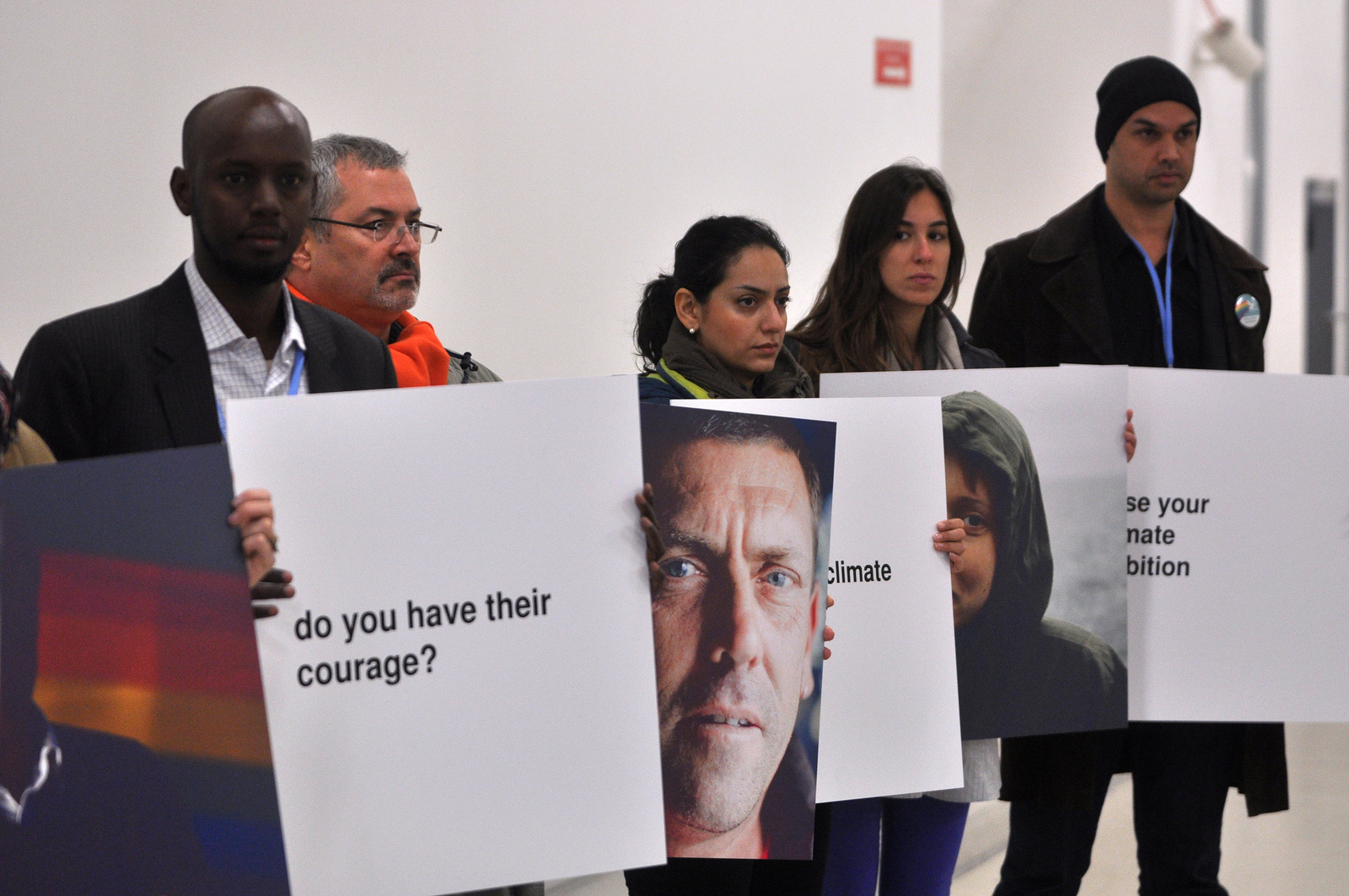
I stood in a silent vigil this morning with a bunch of other NGOs. A long line of us positioned ourselves along the entrance corridor to the stadium proper. We all either had pictures of theArctic 30, or signs telling people to take a lead from the 30 and get their shit together. People gawked, news agencies showed up, photographers and videographers showed up. Diplomats looked on. Some smirked, some didn’t. Some people didn’t know what we were doing, others gave a us a raised-fist salute.

But right in the final minutes of the hour-long vigil, a small figure went by. His hand was on his heart and he gave us each a nod of thanks as he passed along the long line of silent protestors. It was Yeb Sano, the head of Philippines delegation. The guy who gave the onlyspeech worth listening to on the first day of the summit – pleading with the world to not let his islands and people drown. I held a few different signs for the hour I was there, but at that moment I was at the end of the long line holding a sign which said, “Do you have their courage?” I made eye-contact with Sano for a split second, and I deflated like a balloon. This would be the third day of his fast to try to get policy-makers to get moving on mitigating climate change.

In that moment, I thought to myself, “Christ, he must be so hungry right now.”

 10834922444_9424df1696_h
Posted in Uncategorized | Tagged , , , , , , , , | Leave a comment

COP19 part I: The little UN thing that could

On the way to the Stadion Narodowy – the national stadium in Warsaw hosting the COP 19 UN Climate Talks – I pointed out to a colleague that the building looked like the cup part of a cupcake. She said it looked like a circus tent.
 
From a metaphorical point of view, she’s mostly right. The spectacle element is definitely there. You have an audience raptly caught up in the chattering of overly-dressed Masters of Ceremony. You have the thrill of listening to high-wire phrases like, “You know very well that no-one expects us all contribute the same level of effort in this quest for better tomorrow [SIC],” and, “We are all aware of the role of the Kyoto Protocol in the mitigation effects deployed by parties listed in Annex I and the importance of maintaining the continuity of the mitigation procedures adopted by those parties.”
 
The circus animals would be the beleaguered whipped journalists. They are forced to walk circles around a stadium the size of a large city block, hoping to get statements from officials which carry slightly more meaning than the types of things you get from athletes: “We played hard and we’ll continue to play hard and keep up the offence and try to keep it in the zone and maybe stop climate change. Thanks Bob.”
 
It’s worth noting that the journalists, the most reliable source for the rest of the world to know what’s going on, are kept in a room which is so far away from where anything is actually happening, they may as well be in Gdansk.
 
I asked another colleague if the other COPs were like this  with the great distance between the press and the plenary rooms. She said, “Yes.”
 
I said, “Okay, next time we’re all bringing bicycles.”
And like most circuses, or any place with a captive audience, you even have ridiculously overpriced ‘sandwiches’ which contain nothing but a leaf of lettuce.
 
With head of the UNFCCC, Christiana Figueres, considering speaking at a concurrently running ‘Coal Summit’ in Warsaw, and the hastily pulled blog post by Polish COP 19 organizers which said a melting arctic is an opportunity to “save time and energy” – it seems the circus might have bled out onto the streets.
 
Frankly, considering the fact that a ‘Coal summit’ is even allowed to happen during COP19, or that certified morons are organizing the thing in the first place, suggest the Polish Government is inhaling its own fumes.
 
The circus metaphor pretty much ends there, though.
 
You see, at a circus, even if it’s a clown shot out of a cannon, things actually get done. Right now, listening to long droning platitudes as everyone thanks everyone else for showing up, and for being in Poland, and for being themselves, and for being themselves while in Poland, the whole thing strikes me as going nowhere.
 
This is largely because everybody is pretty much saying the same thing: Something bad is happening to the planet, something needs to be done, that something needs a plan, but first we need to plan how we’re going to plan that something. Let’s all agree to plan to make a plan to deal with that something.
 
Truth is, the only person that said anything worth listening to was the head of Philippines delegation. You see, his brother is pulling bodies out of the rubble after a mega-Typhoon (“mega” being the new addition to anything which is, apparently, not bad enough) turned vast parts of his island into wet debris. He’s pretty sure that climate change is the cause of it. And he’s pretty sure the people making plans to make a plan about something are complicit by sitting around squabbling about minutia and personal responsibility.
 
Granted, it is early days. Something long and sausage-shaped may come out of all of this glad-handing and platitude-wielding. Who knows, maybe they’ll fire a delegate out of a cannon up into the coal-choked Warsaw sky.
 
Maybe, but I doubt it.
Posted in Uncategorized | Tagged | Leave a comment

COP19 part IIII: The little UN thing that could

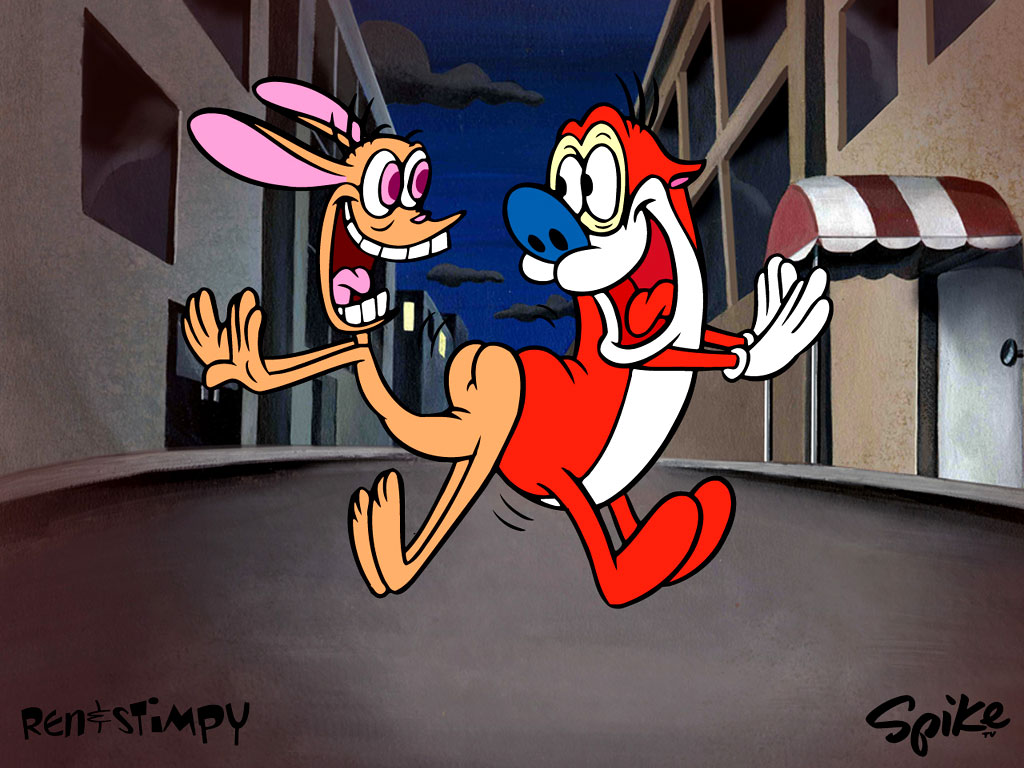
ren-and-stimpy-1-745973

Imagine you’re trying to disarm a bomb in the basement of the fully occupied high-rise you live in (if you need to add dramatic music, sweaty foreheads and a beeping digital clock, please do so).

The clock is ticking down. There are five of you – each with a specific task to contribute, each with a special skill which is needed to successfully keep the entire block from being turned into meaty rubble.

Now, imagine that one of you suddenly says, “I think I’m going to go back to my apartment and finish the bomb I’ve been working on,” and walks off to the elevator.

And then another person says, “That reminds me, I haven’t cleaned up after last night’s explosion at my place. Would you believe? There’s radioactive debris everywhere,” and heads off to follow the first guy.

Depending on your attitude about life, my guess is your feelings would range from miffed to spit-flying apoplexy.

That’s pretty much what Australia and Japan did today. Australia, whose newly elected Prime Minister Tony Abbott said, “The climate change argument is absolute crap,” in reference to the fact that Australia was so totally on fire you could see smoke rising up from the back of his jacket. And Japan, where Tepco – the Stimpy to Prime Minster Abe’s Ren – has managed to turn the entire country into the opening credits of The Simpsons.

If you’ve read my previous entry, you’d know how volatile and fragile things are around here as it is. Not only is the decision-making process totally convoluted and counter-intuitive inside the building, but the COP19 itself appears to be built on solid layer of cheap ironyAlstom, for example, has built 95% all the coal power plants in Poland. ArcelorMittal is the world’s largest mining company. When you consider that the UN climate negotiations here in Warsaw are about reducing the amount of turd-coloured air we breathe, I find it weird that they are proudly displayed as the top two partners of this summit. This, to me, is like the KKK sponsoring a race-relations convention.

Then, you have the Polish ‘Environment Minister’ who is so into coal it could be considered a fetish. He claims that the coal he plans on producing will be done in an ecologically friendly way. The fact is, though, if you have shoes made of dog shit, wiping your feet a couple times on the doormat won’t change much.

So, what we have here is a global summit about reducing carbon emissions to avoid mankind ending up in cockroach fairy tales. It is in a country whose government likes to gnaw on coal for dessert. It is brought to you by the very people who would be pin-cushioned if any emission reduction is passed. And it’s all rendered silly by a screaming-mob-style negotiation technique. This house of cards appears to be built in monsoon season, and the knock-on effect of Japan and Australia backing out of their commitments may send the bomb disarmament team scurrying back to their homes. Directly above the explosive they built.

The lack of defibrillators around here, I feel, will be seen as an oversight.

Posted in Uncategorized | Leave a comment